













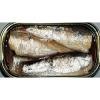

Sardine / Mackerel / Herring
Packed in round tall cans : 115, 200, 425 gms
Packed in Oval cans : 215, 425 gms
Packed in club cans : 125 gms
Sardine
Canned "sardines" in supermarkets may actually be sprats (such as the "brisling sardine") or round herrings. The actual sizes of the fish canned vary by species. Good quality sardines should have the head and gills removed before packing. They may also be eviscerated before packing (typically the larger varieties), or not; if not eviscerated they should be free of undigested or partially digested food or feces (accomplished by holding the live fish in a tank for long enough that their digestive systems empty themselves). They may be packed in oil or some sort of sauce.
Sardines are also healthy and considered a "brain food." These fish are rich in omega 3 fatty acids, which can help maintain a healthy heart. Recent studies suggest that omega-3 fatty acids slow the progression of mild to moderate Alzheimer's disease. These fatty acids can also help control blood sugar level. Not only are sardines packed with omega-3 fatty acids, but they are also a good source of vitamin D, calcium and B12. Sardines are extremely low in contaminates such as mercury and PCBs.
Mackerel
Mackerel is a common name applied to a number of different species of fish, mostly, but not exclusively, from the family Scombridae. They occur in all tropical and temperate seas. Most live offshore in the oceanic environment but a few, like the Spanish mackerel (Scomberomorus maculatus), enter bays and can be caught near bridges and piers. The largest species called "mackerel" is the king mackerel (Scomberomorus cavalla) which can grow to 66 inches (1.68 m). Common features of mackerels are a slim, cylindrical shape (as opposed to the tunas which are deeper bodied) and numerous finlets on the dorsal and ventral sides behind the dorsal and anal fins. The scales are extremely small, if present. A female mackerel lays about 500,000 eggs at a time.
Herring
Herrings are small, oily fish of the genus Clupea found in the shallow, temperate waters. Herrings move in vast schools, coming in spring to the shores of Europe and America, where they are caught, salted and smoked in great quantities. Canned "sardines" (or pilchards) seen in supermarkets may actually be sprats or round herrings. Herring are very high in healthy long-chain Omega-3 fatty acids, EPA and DHA. They are a source of vitamin D.